For most businesses, tracking employee attendance feels straightforward until it is not. A missed punch here, a disputed overtime claim there, or a leave request that was verbally approved but never recorded. Before long, payroll takes longer than it should, HR is chasing down corrections, and managers are spending time on administrative tasks instead of their actual work.
This is why attendance management systems have become a standard part of workforce operations for many businesses, helping to reduce errors and administrative workload by automating attendance, leave, and payroll within a single integrated workflow.
Solutions such as FAST People by E Voyze are designed specifically to support Malaysian businesses managing shift-based teams by combining attendance tracking, leave management, and payroll integration in a single platform.
This article explains what an attendance management system is, how it works, what it replaces, and why businesses that continue relying on manual methods are often carrying hidden operational costs without realising it.
What Is an Attendance Management System?
An attendance management system is software that automates the tracking, calculation, and reporting of employee work hours. It records when employees clock in and out, calculates total hours worked including overtime, manages leave balances, and feeds accurate data directly into payroll, all without manual input from HR.
The term is sometimes used interchangeably with time and attendance software or time tracking software. All three refer to the same category of tool: a system that replaces paper registers, manual timesheets, and spreadsheet-based tracking with a centralised, automated, and auditable process.
For HR managers and business owners, the practical value is straightforward. Instead of reconciling attendance records at the end of each month, the system maintains a live, accurate record of every employee’s hours, leave status, and overtime, ready for payroll processing at any time.
The Problem with Manual Attendance Tracking
To understand why attendance management systems matter, it helps to understand what they replace and what that costs.
1. Manual errors add up quickly
When attendance is tracked manually through paper logs, punch cards, or spreadsheets, errors are inevitable. Incorrect time entries, missed punches, and data transfer mistakes between attendance records and payroll systems are all common. These are not careless mistakes; they are a predictable outcome of a process that depends on human accuracy across hundreds or thousands of entries every month.
Research from EY found that organisations relying on non-automated payroll processes could expect a nearly 20% error rate, and that nearly one in six businesses experienced legal, compliance or regulatory issues due to payroll errors in the previous year.
2. Time theft is more common than most employers assume
Buddy punching, where one employee clocks in or out on behalf of an absent colleague, is one of the most widespread forms of time theft in workplaces that rely on manual or PIN-based attendance systems. According to the American Payroll Association, 75% of businesses are affected by buddy punching, and analysis from Nucleus Research found it accounts for approximately 2.2% of gross payroll losses. For a business with 50 employees, that is a material cost running silently in the background every month.
3. Absenteeism is difficult to manage without data
Unplanned absences are disruptive and expensive. Research shows that unplanned absences drive an average 36% loss in productivity, significantly higher than the impact of planned leave. When attendance data is fragmented or incomplete, managers have no reliable way to identify patterns, address chronic absenteeism, or make informed staffing decisions.
4. HR time is consumed by reconciliation
Without an automated system, HR staff spend significant time each payroll cycle cross-referencing attendance records, chasing approvals, and correcting discrepancies. This is time that could be spent on recruitment, employee development, or workforce planning.
How an Attendance Management System Works
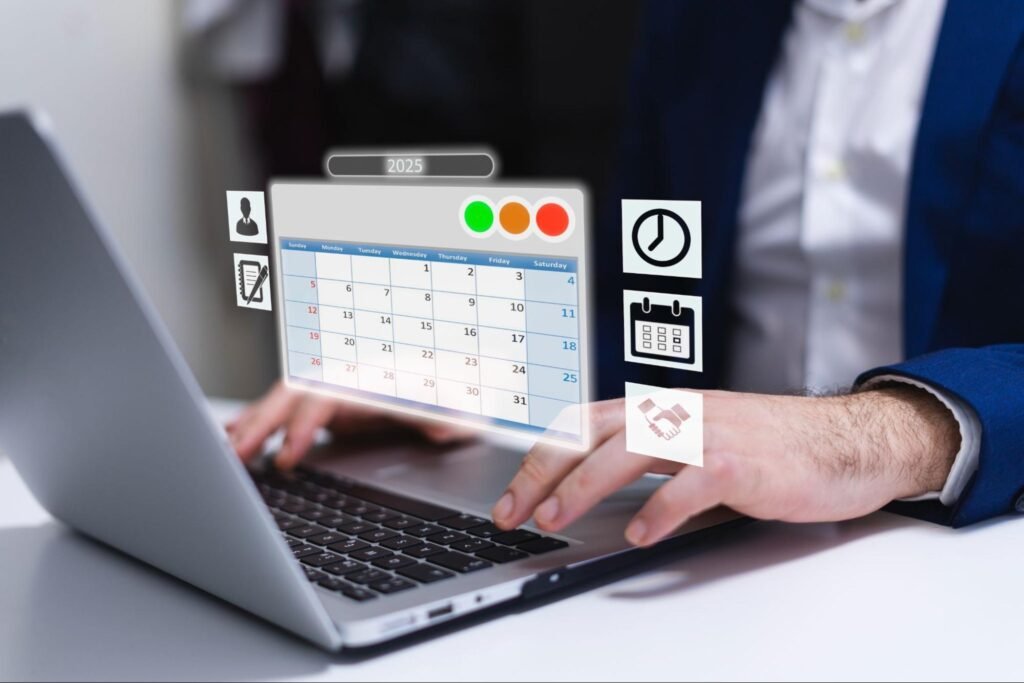
Modern attendance management systems operate through a combination of hardware and software that captures, processes, and stores attendance data in real time.
1. Clock-in and clock-out capture
Employees record their attendance through one or more input methods depending on the system and workplace setup. Common methods include facial recognition terminals, fingerprint scanners, mobile applications with GPS verification, and RFID card readers. The system timestamps each entry and associates it with the employee’s profile automatically.
2. Shift and roster management
Managers create and assign shifts within the system. When employees clock in outside their scheduled hours, the system flags early arrivals, late arrivals, and early departures automatically. This removes the need for supervisors to monitor attendance manually and ensures accurate records regardless of shift complexity.
3. Overtime calculation
The system tracks cumulative hours against each employee’s contracted schedule and calculates overtime according to the rules configured for the organisation. This can include daily overtime thresholds, weekly caps, and public holiday multipliers, all applied consistently and without manual calculation.
4. Leave management integration
Leave requests are submitted and approved within the system. Approved leave is reflected in attendance records automatically, ensuring that payroll calculations account for leave taken without HR needing to reconcile two separate records. Leave balances update in real time.
5. Payroll-ready reporting
At the end of each pay period, the system produces reports that summarise total hours worked, overtime, leave taken, and any exceptions. These feed directly into payroll processing, significantly reducing the time required and the risk of calculation errors.
Key Features to Look For
Not all attendance management systems are built to the same standard. For HR managers evaluating options, these are the features that have the most direct impact on day-to-day operations.
1. Facial recognition.
Facial recognition significantly reduces the risk of buddy punching because attendance is tied directly to the employee’s biometric identity. Only the registered employee can record their own attendance, and the process is fast and contactless. This is particularly relevant for hospitality and service environments where staff turnover is higher and shift-based rosters are common.
2. Shift scheduling and roster planning.
The ability to create, assign, and adjust shifts within the same system removes the need for separate scheduling tools. Roster changes are reflected immediately in the attendance tracking layer.
3. Automatic overtime tracking.
Overtime rules vary by organisation, employment type, and local labour regulations. A well-built system applies these rules automatically, reducing the risk of under- or over-payment and ensuring compliance without manual checking.
4. Real-time visibility.
Managers and HR personnel should be able to see current attendance status across the workforce at any point in the day, not just at the end of a pay period. This is particularly useful for operations running multiple shifts or managing large teams across a site.
5. Payroll integration.
The clearest measure of an attendance system’s value is how directly it connects to payroll. Systems that require manual export and re-entry of data between platforms reintroduce the same errors the system was supposed to eliminate. Native integration or seamless data transfer is essential.
6. Leave management.
Attendance and leave are two sides of the same record. A system that handles both in one place ensures that payroll calculations are always based on complete information.
Common Types of Attendance Tracking
Businesses implement attendance tracking in different ways depending on their size, workforce structure, and operational environment.
1. Biometric systems. These use physical identifiers such as a face scan or fingerprint to verify identity at the point of clock-in. They offer the highest level of accuracy and are the most effective solution for preventing time theft. They are best suited to fixed-location workplaces where employees clock in and out at a terminal.
2. Mobile attendance systems. Employees clock in via a smartphone application, often with GPS verification to confirm location. This is suitable for field-based teams, remote workers, or businesses with staff working across multiple locations.
3. Card-based systems. Employees swipe or tap an RFID card or fob to record attendance. These are widely used and easy to deploy but are vulnerable to buddy punching since a card can be handed to another person.
4. Web-based systems. Employees log their attendance through a browser-based portal. This is common in office environments and works well for salaried staff on standard hours, though it relies on self-reporting and is difficult to enforce for hourly workers.
Most modern attendance management systems combine more than one of these methods, allowing businesses to choose the most appropriate input method for each part of their workforce.
Key Benefits for HR Managers
For HR teams, the shift from manual to automated attendance management changes the nature of the work itself.
1. Payroll accuracy improves significantly.
When hours, overtime, and leave are calculated automatically and fed directly into payroll, the margin for error narrows to near zero. HR no longer spends the days before payroll closing chasing records and correcting discrepancies.
2. Compliance becomes manageable.
Labour regulations in Malaysia and most other markets require accurate records of employee working hours. An automated system maintains a complete and auditable trail of attendance data, making compliance reporting straightforward and reducing exposure to disputes.
3. Absence patterns become visible.
Aggregate attendance data allows HR managers to identify which employees, teams, or shifts have the highest absence rates and when. This makes it possible to address issues proactively rather than reacting to problems after they have affected operations.
4. Leave management becomes self-service.
Employees submit leave requests through the system, managers approve or decline them, and balances update automatically. HR is removed from the middle of a process that should not require their involvement for routine requests.
5. Time spent on administration decreases.
The hours that HR teams currently spend on attendance reconciliation every month are redirected toward work that requires human judgement: recruitment, employee relations, performance management, and workforce planning.
Key Benefits for Business Owners
For business owners, the value of an attendance management system is ultimately financial, though it also shows up in operational stability and risk reduction.
1. Direct cost savings from reduced time theft.
Biometric attendance significantly reduces the risk of buddy punching and inaccurate time entries. For a business losing 2.2% of gross payroll to time theft, the savings from deploying a biometric system cover the cost of the system itself many times over.
2. Labour cost visibility.
Real-time overtime tracking allows managers to monitor labour costs as they accumulate during a pay period rather than discovering them after payroll closes. This makes it possible to adjust staffing or approve overtime more deliberately.
3. Reduced legal and compliance risk.
Payroll errors and inadequate record-keeping create exposure to labour disputes, employee claims, and regulatory penalties. Automated systems reduce that risk by maintaining accurate records and applying consistent rules.
4. Scalability.
As a business grows, the administrative burden of manual attendance tracking grows with it. An automated system scales without requiring proportional growth in HR headcount.
5. A foundation for broader HR automation.
Attendance data connects directly to payroll, leave management, and workforce analytics. Implementing attendance management as part of an integrated HR system creates a foundation that supports more informed decisions across the entire employee lifecycle.
Frequently Asked Questions
1. What is an attendance management system?
An attendance management system is software that automates the recording, calculation, and reporting of employee work hours. It tracks clock-ins and clock-outs, calculates overtime, manages leave, and integrates with payroll to ensure accurate and timely compensation without manual data entry.
2. How does an attendance management system improve payroll accuracy?
The system automatically calculates total working hours, overtime, and leave taken for each employee. This data feeds directly into payroll processing, removing the manual reconciliation step that is most prone to errors. Organisations that automate this process see a significant reduction in payroll discrepancies compared to those using manual timesheets.
3. What is buddy punching and how does a system prevent it?
Buddy punching occurs when one employee clocks in or out on behalf of a colleague who is not physically present. Systems that use biometric verification, particularly facial recognition, significantly reduce the risk of buddy punching because attendance is tied to the employee’s biometric identity. This protects both payroll accuracy and fairness among staff.
4. Can an attendance management system handle shift workers and overtime?
Yes. Modern systems are designed for shift-based environments. Managers configure shift schedules and overtime rules within the system, and the software automatically flags deviations, calculates additional hours, and applies the relevant rate. This makes it particularly suitable for hospitality, retail, and manufacturing operations.
5. How does the system manage leave requests?
Employees submit leave requests through a self-service portal within the system. Requests are routed to their manager for approval, and once approved, the leave is automatically reflected in attendance records and payroll calculations. Leave balances are updated in real time.
6. How long does implementation typically take?
Implementation timelines vary depending on workforce size, attendance rules, and integration requirements. Many attendance management systems are modular, allowing businesses to begin with core attendance tracking and gradually add features such as leave management, payroll integration, and workforce reporting as requirements become more complex.
Conclusion
Manual attendance tracking is not a neutral choice. Every month that a business records attendance on paper, in spreadsheets, or through a system that is not integrated with payroll, it absorbs errors, administrative overhead, and the quiet financial drain of unchecked time theft. These costs are real, even when they are not immediately visible on a financial report.
An attendance management system replaces that with a process that is accurate, auditable, and largely self-managing. HR gets back the time that was consumed by reconciliation. Payroll becomes a calculation rather than a correction exercise. Managers can see what is happening with their workforce in real time.
For businesses in Malaysia that manage shift-based teams, the case is particularly clear. Facial recognition, automatic overtime tracking, and direct payroll integration are no longer advanced features reserved for large enterprises. They are the baseline expectation for any modern HR operation. Businesses looking to modernise attendance tracking typically start by evaluating how well a system fits their workforce structure, shift requirements, and payroll processes.
Interested in seeing how FAST People handles time and attendance for your team? FAST People is E Voyze’s attendance management system for Malaysian businesses, covering facial recognition clock-in, shift scheduling, overtime tracking, and direct payroll integration. To see it in action for your team size and roster setup, get in touch with E Voyze to arrange a demo.